Home›Yacht Itineraries
Yacht Itineraries
Five seven-day routes for yachts of about 30 to 80 metres: the Balearics, the French Riviera, the Amalfi Coast, the Dalmatian Coast and the Cyclades.
Last checked October 2026.
Try "Saint-Tropez", "Positano", "truffle" or "Cyprus".
Home›Yacht Itineraries
Five seven-day routes for yachts of about 30 to 80 metres: the Balearics, the French Riviera, the Amalfi Coast, the Dalmatian Coast and the Cyclades.
Last checked October 2026.
A week across the western Mediterranean's most fashionable islands: Palma's cathedral and old town, the wild southwest of Mallorca, then the crossing to Ibiza, the clear shallows of Formentera, the beach clubs of Cala Jondal and the sunset at Es Vedrà. One open-water crossing apart, the hops are short, and the week ends below the walls of Ibiza's old town.
On anchoring: across the Balearics, a yacht's anchor and chain must stay off the protected Posidonia seagrass, and patrol boats check anchorages through the season and ask boats on seagrass to move. The public buoy fields take boats only up to 25 metres, so a superyacht anchors on sand, and the captain plans each stop around the seagrass maps.
Guests board at Club de Mar, rebuilt and reopened with more than 70 berths for yachts of 40 to 170 metres, at the western end of Palma's port. Spend the afternoon in the old town: the Gothic cathedral of La Seu above the sea walls, the Almudaina Palace beside it and the lanes behind. Dine at Marc Fosh or Zaranda, two of Palma's MICHELIN-starred restaurants.
Run west along the Bay of Palma and round Cap de Cala Figuera to the southwest tip of Mallorca. Anchor off Sant Elm, facing the island of Sa Dragonera, a natural park whose ridge rises sheer from the sea, and take the tender into the harbour of Port d'Andratx. For dinner, a car takes guests inland to Es Capdellà and Sa Clastra, the MICHELIN-starred restaurant of Castell Son Claret.
The one open-water passage of the week, best made early in the day. Berth at IGY Ibiza Marina, at the foot of Dalt Vila, the walled old town that is part of the UNESCO World Heritage Site of Ibiza, Biodiversity and Culture. Walk up through its gates to the cathedral at the top for the view over the harbour, and dine at Sublimotion, the 12-seat dinner staged with light and projection, open in summer only.
A short run south through the channel of Es Freus to Formentera. Anchor on sand off Ses Illetes, the long white spit at the island's northern tip, inside the Ses Salines Natural Park, whose Posidonia meadows keep the water among the clearest in the Mediterranean. Spend the day swimming from the yacht and the tender.
Cross back to Ibiza's south coast and anchor in Cala Jondal for lunch at Blue Marlin Ibiza or at Casa Jondal, the seafood restaurant on the same bay and one of the island's hardest tables to book. In the late afternoon, move west to Cala d'Hort, facing the rock of Es Vedrà, for the sunset.
Run back east along the south coast to the beaches of the salt flats, also inside the Ses Salines Natural Park. Lunch at Experimental Beach in Las Salinas, with contemporary Balearic cooking, or at El Chiringuito on the quieter beach of Es Cavallet.
A short run north to IGY Ibiza Marina. Spend the last evening in Dalt Vila and the harbour quarter of La Marina below it; guests disembark the next morning.
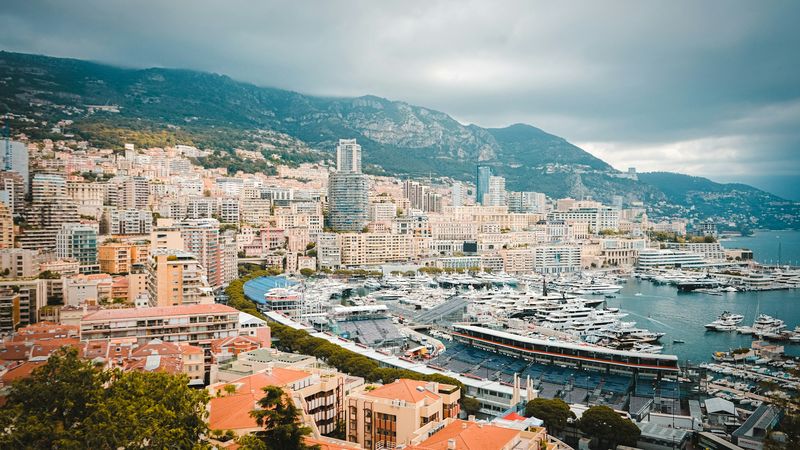
This is the classic Riviera week: short hops between the deep bays and capes of the Côte d'Azur, with the coast's great hotels, three-star tables and island anchorages all within a tender ride. It runs from Monaco's harbour past Cap Ferrat, Cap d'Antibes and the Lérins Islands to the beach of Pampelonne and the old port of Saint-Tropez. The distances are small, so most of each day is spent at anchor rather than under way.
Guests board at Port Hercule, the deep-water harbour below Monte-Carlo, and the evening is spent ashore. Walk up to the Place du Casino for a drink before dinner at Le Louis XV, Alain Ducasse's three-star restaurant in the Hôtel de Paris. Earlier in the day there is time for the Prince's Palace on the Rock or an afternoon at Monte-Carlo Beach.
A short run west around Cap Ferrat brings the yacht into the Rade de Villefranche, a deep, sheltered bay with good holding in mud and sand, long used by large yachts. Ashore, see Jean Cocteau's Chapelle Saint-Pierre on the Villefranche waterfront and the gardens of the Villa Ephrussi de Rothschild on Cap Ferrat, then lunch by the seawater pool at Club Dauphin, the beach club of the Grand-Hôtel du Cap-Ferrat, for hotel guests or by arrangement through the hotel. For dinner, a car climbs to the medieval village of Èze and the two-star La Chèvre d'Or, high above the sea.
Cross the Baie des Anges to the east side of Cap d'Antibes and anchor off Garoupe beach, where sand bottom in about 8 to 12 metres gives reliable holding, sheltered from westerly winds. Lunch at the Hôtel du Cap-Eden-Roc, on the terrace above the seawater pool cut into the rocks (book well ahead). In the afternoon, take the tender into Antibes for the Musée Picasso in the Château Grimaldi and the old town's Marché Provençal.
Round Cap d'Antibes and anchor between Île Sainte-Marguerite and Île Saint-Honorat, a mile off Cannes. On Saint-Honorat, Cistercian monks still farm the island and make wine at the Abbaye de Lérins; on Sainte-Marguerite, the Fort Royal held the Man in the Iron Mask. Lunch on the sand at La Guérite, reached only by boat. Several hundred boats anchor here each season, and the seabed between the islands is largely Posidonia seagrass, so the captain will choose a sandy spot (see note on Posidonia below). Cannes and the Croisette are a short tender ride for the evening.
The longest passage of the week runs south-west past the red rocks of the Esterel to Pampelonne Bay, the long beach of Ramatuelle. Lunch at Le Club 55, run by the de Colmont family since 1955, or at Philippe Starck's La Réserve à la Plage. For dinner, a short drive inland leads to La Voile, the two-star restaurant of La Réserve Ramatuelle. Anchoring here is tightly zoned by size: under a prefectoral order in force since June 2026, yachts of 24 to 45 metres use the buoyed mooring field, larger yachts anchor in separate zones (those over 80 metres between Cap Pinet and Pointe de la Bonne Terrasse), and anchoring on Posidonia is banned outright.
Round the cape into the Gulf of Saint-Tropez and anchor in the Baie des Canoubiers (Anse des Canebiers), sheltered from the east, south and west, and a well-known summer anchorage for superyachts just east of the town. Spend the day on the sandy beach below Cheval Blanc St-Tropez, and in the evening take the tender ashore for dinner at its three-star La Vague d'Or, Arnaud Donckele's restaurant.
A few minutes' run brings the yacht stern-to on the quay of the old port of Saint-Tropez. Walk up to the Citadelle for the view over the gulf, see the paintings of the Musée de l'Annonciade on the harbour, and browse the Place des Lices market on market mornings. The last dinner can be in the village or at Château de la Messardière above Pampelonne; guests disembark the next morning.
On anchoring: since 2019, a French prefectoral order bars yachts over 24 metres from anchoring on Posidonia seagrass anywhere on the French Mediterranean coast, and many bays now have designated anchoring zones or mooring fields. Captains work from the current official maps (MEDAMP / Donia), and the charter broker can confirm the plan for each anchorage.
Why not Porquerolles: the Îles d'Hyères are among the most beautiful islands on this coast, but yachts over 24 metres have been barred from anchoring anywhere in the rade d'Hyères since December 2020, and mooring for them is banned in the marine heart of Port-Cros National Park. A superyacht can pass them on the way west, but cannot stop.
A short, sheltered week inside one of the most beautiful gulfs in the Mediterranean, with no long passages: Capri and its grottoes, the cliff villages of Positano and Amalfi, the islets of Li Galli, then the green volcanic island of Ischia and the painted harbours of Procida. Few routes put so many celebrated places, and so many of Italy's finest tables, within an hour or two of each other by sea.
Board at Marina di Stabia, a modern marina on the Bay of Naples with 871 berths for yachts up to 100 metres, and cross the bay to Capri. Yachts up to 60 metres can berth at the Porto Turistico di Capri at Marina Grande, which is fully booked in high summer; larger yachts anchor off. Dine at J.K. Place Capri, on the water's edge at Marina Grande, or take the funicular up to the Piazzetta.
Circle the island in the morning. Stop at the Blue Grotto, which guests enter by small rowing boat, then lunch at Il Riccio, the Capri Palace Jumeirah beach club on the rocks beside the grotto, or at La Fontelina, the beach club at the foot of the Faraglioni, open since 1949. Capri restricts boat traffic close to the Faraglioni, so the yacht stands off and guests go in by tender, or swim; the captain checks the current local rules. In the evening, dine at L'Olivo in Anacapri, Capri's only two-MICHELIN-star restaurant.
Cross to Marina del Cantone, the bay of Nerano, for a long lunch at Le Sirenuse Mare, Le Sirenuse's beach club, open to non-guests through the season. Nerano lies inside the Punta Campanella marine protected area, where only smaller craft may enter the inner zone, anchoring is by day only in marked zones and never on Posidonia seagrass, and speed is limited to 5 knots within 300 metres of shore. A yacht of this size therefore stands off outside the park's inner zone and sends guests in by tender. In the afternoon, take the tender to swim between the islets of Li Galli; the nearby rock of Vetara is a no-entry zone of the marine park. Anchor off Positano for the night and dine at Zass, the MICHELIN-starred restaurant of Il San Pietro di Positano, or by candlelight at La Sponda at Le Sirenuse.
A short run east along the cliffs, past the Emerald Grotto at Conca dei Marini, to Amalfi. Visit the Cathedral of Sant'Andrea and its Cloister of Paradise, then drive up to Ravello for the gardens of Villa Rufolo and Villa Cimbrone; in July, the Ravello Festival plays there. Lunch at Borgo Santandrea, whose restaurant holds a MICHELIN star, on the cliffs just outside Amalfi, and dine at Il Pantaleone at Caruso, A Belmond Hotel, which looks out over the whole coast.
Round Punta Campanella, the tip of the peninsula, and come into the Bay of Naples. The Bay of Ieranto, just east of the cape, is closed to motor craft except at the marine park's buoy field, so admire it from offshore. Anchor off Sorrento, walk the old town above the cliffs, and dine at Torre del Saracino, Gennaro Esposito's two-MICHELIN-star restaurant, now at the Bellevue Syrene hotel in Sorrento.
Cross the bay to Ischia, the "green island" of vineyards and hot springs. Anchor below the Castello Aragonese, the medieval fortress on its own islet off Ischia Ponte, and climb through it. Spend the afternoon at the Negombo thermal gardens at Lacco Ameno or in the fishing village of Sant'Angelo, and dine at Daní Maison, Nino Di Costanzo's restaurant and Ischia's only two-MICHELIN-star table. Ischia's waters belong to the Regno di Nettuno marine protected area, the largest in Campania, which also takes in Procida and Vivara.
Make the short hop to Procida and anchor off the Corricella, the island's car-free fishing harbour of pink, yellow and blue houses. Walk up to Terra Murata, the fortified old town at the island's highest point, before lunch on board. In the afternoon, cross the Bay of Naples, with Vesuvius ahead, back to Marina di Stabia. For the last night, dine ashore in Castellammare di Stabia at Piazzetta Milù, which holds two MICHELIN stars; guests disembark the next morning.
A week down the most island-rich stretch of the Adriatic, from Diocletian's Palace in Split to the walls of Dubrovnik. The distances are short, the water is clear, and each day brings a different kind of place: Venetian harbour towns, pine-covered islets, sea caves, a national park with saltwater lakes and car-free islands. Few weeks at sea pack so much into so little sailing.
Board at ACI Marina Split, at the western end of the harbour, a few minutes from Diocletian's Palace; leave time for the palace before casting off, and for lunch at Krug, Split's MICHELIN-starred restaurant on the Riva. Cross through the Split Gate between Šolta and Brač and run east along Brač's south coast to Bol. Anchor off Zlatni Rat, the long spit of pebble beach that shifts with wind and current; the afternoon maestral that makes Bol a windsurfing centre usually drops by evening.
Run west along the Hvar Channel and round the island's western tip to Hvar Town. Spend the day among the Pakleni Islands, the pine-covered chain across the bay, swimming off Palmižana and Vinogradišće Bay on Sveti Klement. In the evening, take the tender into Hvar Town for St Stephen's Square, the 1612 theatre above the Arsenal and the walk up to the Fortica for the view over the islands, then a drink or dinner at Palace Elisabeth, the historic palace hotel on the square.
Head southwest for Biševo and arrive near midday, when the light in the Blue Cave is at its strongest. Private boats and tenders may not enter: guests go ashore by tender at Mezuporat, buy a numbered ticket and transfer to the small authorised boats, with a wait of an hour or more in summer and about five minutes inside. In the afternoon, anchor well off Stiniva on Vis's south coast and come in by tender or swim through the few-metre gap in the cliffs; the cove is a protected natural monument, so follow any local rules on boats inside it. Finish in Vis Town, closed to foreigners as a military zone until 1989.
The longest passage of the week, east along the outer islands to Korčula, the walled town on its own small peninsula. Walk the herringbone lanes to St Mark's Cathedral and, on summer evenings, watch the Moreška sword dance. Dine at LD Restaurant, the MICHELIN-starred restaurant of Lešić Dimitri Palace, on the old town's sea wall.
A short run to Polače, a deep bay inside Mljet National Park with the ruins of a Roman palace on its shore. From there, the park's paths and boats lead to the two saltwater lakes, Veliko Jezero and Malo Jezero, and the 12th-century Benedictine monastery on St Mary's islet. The park charges entry and controls mooring: every visiting yacht needs an entrance ticket and the park's permission, priced by the yacht's size and length of stay; anchoring is allowed only in designated areas at Polače and Pomena (Lokva Bay), speed is limited to 5 knots within 150 metres of the shore, only rowing boats may enter Malo Jezero and the Soline channel, and discharging waste water and the use of underwater lights are banned.
East to the Elaphiti, the car-free islands just north of Dubrovnik. Stop at Lopud for its Franciscan monastery and the walk across the island to the sandy bay of Šunj, then move on to Šipan, the largest of the group, with olive terraces and the ruins of summer villas built by Dubrovnik's noble families.
A short final run through the Koločep channel to Gruž and Marina Frapa Dubrovnik, about 10 minutes by car from the Old Town. Walk the city walls early, before the heat and the crowds, and end the week at Restaurant 360, Dubrovnik's MICHELIN-starred restaurant, set on the walls above the old harbour.
A week through the Cyclades, the island group that sums up the Greek Aegean: grey-stone Kea, the volcanic coves of Milos, cliff-top Folegandros, the flooded caldera of Santorini, quiet Antiparos and, at the end, Mykonos. The route runs south first with the summer meltemi wind astern, then turns north for Mykonos in two shorter steps, so the long legs are the comfortable ones. Few weeks at sea pack in so much variety in so few miles.
The meltemi. From late June to September a strong northerly wind, the meltemi, blows across the Cyclades, at its strongest in July and August, often 20 to 30 knots. It sets the shape of this week. The longest leg, Kea to Milos, runs south with the wind behind; the passages back north, Santorini to Antiparos and Antiparos to Mykonos, are kept short and best made early in the day. Overnight stops favour bays on the south and west sides of the islands, sheltered from the north, and the captain may swap a stop when the wind is up.
Board at Astir Marina, at the Four Seasons Astir Palace, and cruise down the Athens Riviera past Cape Sounion and its Temple of Poseidon to Kea, the Cycladic island nearest Athens. Kea is built of grey stone rather than whitewash and is still visited mostly by Greeks. Lunch or dine at One&Only Kéa Island on the west coast, whose private jetty receives arriving yachts; its guests can walk with an archaeologist to the ruins of ancient Karthaia. Ashore, the hill village of Ioulida keeps the Lion of Kea, an archaic figure carved from the rock.
The longest passage of the week, south with the meltemi astern. In the afternoon anchor off the southwest coast and take the tender into Kleftiko, the sea caves and white rock arches once used as a pirates' hideout. Milos's harbour bay, formed in a volcanic crater, is one of the best natural harbours in the Mediterranean and gives good shelter in a meltemi. Dinner aboard, or in Plaka, the hill town above the bay.
In the morning, visit Sarakiniko on the north coast, a moonscape of white volcanic rock, or the fishing village of Klima with its coloured boathouses at the water's edge. Then cruise east to Folegandros and anchor in Vathy Bay on the southwest coast, near Agali beach. Go up to Chora, the island's main village, built on a cliff edge inside a medieval fortress, for the evening. Vathy is sheltered from the north but takes violent gusts in a strong meltemi; on those days the captain may continue to Santorini.
Santorini is the drowned caldera of an enormous volcanic explosion, with Fira and Oia along its rim. The caldera is too deep to anchor in most places, so large yachts anchor off the black-sand beach of Kamari on the east coast, or take a mooring buoy at Thirasia, and come ashore by tender. Visit the Bronze Age town of Akrotiri and one of the island's wineries for Assyrtiko and Vinsanto, watch the sunset from Oia, then dine aboard under the lit rim of the caldera.
The first leg north, into the meltemi; an early start makes for a calmer passage. Anchor in the channel between Antiparos and the uninhabited islet of Despotiko, where archaeologists are excavating a sanctuary of Apollo, and spend the afternoon swimming in clear, shallow water. Antiparos town is a short tender ride away for an evening ashore, and Naoussa, the fishing harbour on the north coast of neighbouring Paros, a longer one.
A crossing of about three hours northeast to Mykonos. Anchor off the south coast, which faces away from the meltemi, and come ashore by tender for lunch at Nammos on Psarou beach, the island's most established daytime address and a favourite of the yacht crowd. Stay for the sunset at Scorpios at the southern end of Paraga beach. Ornos Bay, below the Santa Marina resort, is the other sheltered anchorage on this coast.
Private yachts may not anchor off Delos or land guests on their own, to protect the archaeological site, so take the morning guided boat from Mykonos port to the island that was the religious centre of the Cyclades, birthplace in myth of Apollo and Artemis. In the afternoon move the yacht round to the Old Port and spend the last evening in the lanes of Mykonos Town. For a final beach lunch by car, Principote is on Panormos beach on the north coast, though that coast takes the full meltemi. Guests disembark the next morning; private jets cannot park at Mykonos Airport in summer and reposition, usually to Athens, so plan the departure slot ahead.
The Mediterranean Season Letter
Four letters a year, one for each season: the Mediterranean from spring to autumn, and Beyond the Mediterranean, into the Alps, in winter. The one best hotel to book, and the events worth crossing a sea for.
We use Google Analytics cookies to see how visitors use the site. Accept them, or decline and the site works just the same. Privacy