Home›The Alps›Customs and Etiquette
Customs and Etiquette
Language, greetings, dress, dining, tipping and useful phrases, country by country.
Last checked October 2026.
Try "Saint-Tropez", "Positano", "truffle" or "Cyprus".
Home›The Alps›Customs and Etiquette
Language, greetings, dress, dining, tipping and useful phrases, country by country.
Last checked October 2026.
French is the language of the French Alps, from Chamonix and Megève in the Haute-Savoie to Courchevel, Méribel and Val d'Isère in the Savoie. English is spoken in the palace hotels, the ski schools and the leading restaurants of the big resorts, but a few words of French are always appreciated.
Say "Bonjour, Madame" or "Bonjour, Monsieur" on entering a shop, a restaurant or a hotel before asking for anything; skipping the greeting reads as rude. From early evening the greeting becomes "Bonsoir". Friends greet each other with a kiss on each cheek (la bise); a handshake is right on first meeting.
Ski clothing is normal at lunch on the mountain and at après-ski, which takes place in the bars at the end of the ski day while guests are still in ski gear; the French name is used the world over. In the evening the grand hotels keep their own standards; check each hotel's dress code.
Lunch is usually served from noon to about 2 pm and dinner from about 7.30 pm; outside those hours many restaurants do not serve full meals. Book ahead for lunch at the great mountain restaurants in season. In the resorts most shops open every day during the season; in the valley towns many close on Sunday afternoons.
Service is included in French prices by law ("service compris"). A tip is not owed, but for good service it is usual to leave a few euros or round up, and more at the great restaurants.
The international FIS Rules for Conduct, set out under Switzerland below, apply on the pistes. In mountain huts (refuges), book beds and meals ahead, bring a hut sleeping bag, keep quiet in the evening and take rubbish back down.
| English | Local | Say it |
|---|---|---|
| Hello / Good day | Bonjour | bon-ZHOOR |
| Good evening | Bonsoir | bon-SWAHR |
| Please | S'il vous plaît | seel voo PLAY |
| Thank you | Merci | mair-SEE |
| The bill, please | L'addition, s'il vous plaît | lah-dee-SYON, seel voo PLAY |
| Enjoy your meal | Bon appétit | bon ah-pay-TEE |
| Goodbye | Au revoir | oh ruh-VWAHR |
Switzerland has four national languages: German, French, Italian and Romansh. German is spoken by about 62 per cent of the population in the north, centre and east; French by about 23 per cent in the west (Romandy); Italian by about 8 per cent in Ticino and southern Graubünden; and Romansh by about 0.5 per cent, only in Graubünden, which is officially trilingual. In the German-speaking resorts (Gstaad, Zermatt, St. Moritz, Davos, Klosters, Andermatt) people speak Swiss German dialect day to day and use Standard German for writing. Standard German is understood everywhere, and English is widely spoken in the great hotels.
"Grüezi" is the polite greeting in German-speaking Switzerland, and "Grüezi mitenand" greets a group. "Merci" is the usual thank you, borrowed from French. In the French-speaking resorts (Verbier, Crans-Montana, Villars) use French, and in Ticino use Italian. Punctuality is expected: arrive on time for a dinner, a meeting or a private ski lesson.
On the mountain, ski clothing is normal in mountain restaurants and at après-ski. In the evening the palace hotels keep a formal standard, and some ask gentlemen for a jacket at dinner while their other restaurants stay smart casual. Check each hotel's own dress code before arrival.
Lunch is usually served between noon and 2 pm and dinner from 6 pm to 9.30 pm; many city restaurants serve throughout the day. "En Guete" is said before a meal. When glasses are raised, look each person in the eye as you touch glasses and say "Prost" (or "Santé" in the French-speaking resorts). Most shops close on Sundays, a long tradition backed by strict rules on Sunday work; shops at airports, railway stations and some tourist areas and ski resorts are the exceptions.
Sundays and public holidays are kept quiet, and most communes set evening quiet hours, usually from about 10 pm; noisy work, loud music and even laundry or mowing are frowned on at those times. Exact hours are set locally, often in the rules of each apartment building, so chalet and apartment guests should ask.
Service is included in Swiss prices. Since a collective labour agreement in 1974, staff pay is covered by the price, so a tip is not owed. Most people still add one: rounding up, or about 10 per cent for good service. A very small tip can read as criticism, and leaving nothing is better than leaving a token amount.
On the pistes the international FIS Rules for Conduct apply: respect others; ski or ride in control; the skier behind chooses a route that does not endanger the one ahead; overtake with enough space; look uphill before entering a run or starting off; do not stop in narrow places or where visibility is poor; climb or walk down at the side of the piste; obey signs and markings; help at an accident; and exchange details after any incident.
In mountain huts, the Swiss hut wardens' association (Schweizer Hütten) asks guests to book beds and meals in advance and to cancel if plans change; to carry enough cash, as many huts take only cash; to sleep where the warden assigns; to bring a hut sleeping bag, which is compulsory in many huts; to keep quiet from about 10 pm; to pack the evening before an early start; and to carry all rubbish back down to the valley.
| English | Local | Say it |
|---|---|---|
| Hello (polite) | Grüezi | GREW-et-see |
| Please | Bitte | BIT-teh |
| Thank you | Merci / Merci vielmal (thanks a lot) | MAIR-see / MAIR-see FEEL-mahl |
| Good evening | Gueten Oobe | GOO-eh-ten OH-beh |
| The bill, please | Die Rechnung, bitte (Standard German) | dee REKH-noong, BIT-teh |
| Enjoy your meal | En Guete | en GOO-eh-teh |
| Goodbye | Uf Widerluege | oof VEE-der-loo-eh-geh |
Italian is spoken across the Italian Alps and the great lakes (Como, Maggiore, Garda), with important exceptions. The Aosta Valley is officially bilingual in Italian and French, and many locals also speak a Franco-Provençal patois. In South Tyrol German is the majority language (about two-thirds of the population), Italian is spoken by about a quarter, and Ladin, a Rhaeto-Romance language, by about 4 per cent, mainly in Val Gardena and Val Badia; place names appear in German and Italian, and in the Ladin valleys also in Ladin (Ortisei is Urtijëi; Selva is Sëlva). In Cortina and the rest of the Veneto Dolomites, Italian is the language, with Ladin in some valleys. English is spoken in the leading hotels.
"Buongiorno" is the polite greeting until the afternoon, and "Buonasera" from mid-afternoon on; greet staff on entering a shop or restaurant. In South Tyrol "Grüß Gott" and "Servus" are used as in Austria, and German is the natural first language in most villages. Friends greet each other with a kiss on each cheek; a handshake is right on first meeting.
Italians dress with care in the evening, in the resorts as in the cities, and smart dress is expected at dinner in the grand hotels of the mountains and the lakes. In the mountains, ski clothing is normal at lunch in the huts and at après-ski. Check each hotel's dress code.
Lunch is usually served from about 12.30 pm to 2.30 pm and dinner from about 7.30 pm, later on the lakes in summer. Most bills carry a cover charge (coperto) per person for bread and table service; it is legal and shown on the menu. In towns many shops close for a long midday break and on Sundays; in the resorts most open daily during the season.
A per-person cover charge (coperto) for bread and table setting is normal and is not a tip, and a service charge (servizio) may already be on the bill. Leaving a few euros, or up to about 10% for excellent service, is appreciated.
The FIS Rules for Conduct, set out under Switzerland above, apply on the pistes. Italian law also requires skiers and snowboarders under 18 to wear a helmet, and requires everyone on the pistes to hold third-party liability insurance, which can be bought with the lift pass. In mountain huts (rifugi), book ahead, bring a hut sleeping bag, keep quiet in the evening and take rubbish back down.
| English | Local | Say it |
|---|---|---|
| Hello / Good day | Buongiorno | bwon-JOR-no |
| Good evening | Buonasera | bwon-ah-SAIR-ah |
| Please | Per favore | pair fah-VOR-eh |
| Thank you | Grazie | GRAHT-see-eh |
| The bill, please | Il conto, per favore | eel KON-toh, pair fah-VOR-eh |
| Enjoy your meal | Buon appetito | bwon ah-peh-TEE-toh |
| Goodbye | Arrivederci | ah-ree-veh-DAIR-chee |
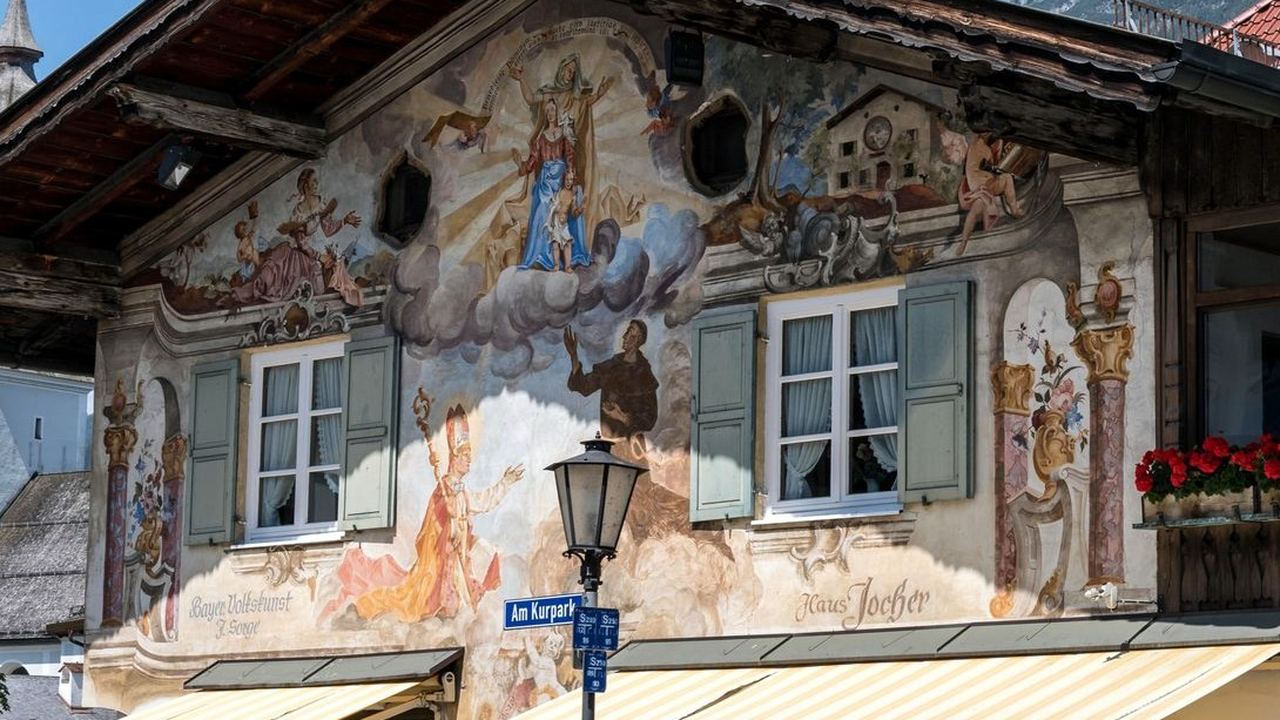
German is spoken throughout the Bavarian Alps, around Garmisch-Partenkirchen, Berchtesgaden and the Tegernsee. Locals often speak Bavarian dialect among themselves, but everyone uses Standard German with visitors, and English is spoken in the leading hotels.
"Grüß Gott" is the standard greeting in Bavaria, as in Austria and South Tyrol; in dialect it is often heard as "griaß di" (to one person) or "griaß eich" (to several). "Servus" is the informal greeting among friends and works as both hello and goodbye.
Traditional dress (Tracht) is formal wear here, not costume. Dirndl and Lederhosen are worn at most weddings and festivals, for church on major holidays, and are regarded as the expected dress at Munich's Oktoberfest. A well-made dirndl or Tracht jacket is correct at a festive evening.
Shops in Bavaria close at 8 pm on weekdays and stay closed on Sundays and public holidays, under the Bavarian Shop Closing Act passed in 2025. Sunday rest has a constitutional basis in Germany. Bakeries may open for three hours on Sundays, and shops at main railway stations and airports are exempt; restaurants open as usual.
Tipping is a thank you rather than an obligation. The custom is to round up, roughly 10 per cent (a bill of €27 becomes €30), and to give the tip to the server when paying rather than leaving it on the table.
The FIS Rules for Conduct, set out under Switzerland above, are the international standard on the pistes. In mountain huts, book ahead, bring a hut sleeping bag, keep quiet in the evening and take rubbish back down.
| English | Local | Say it |
|---|---|---|
| Hello (polite) | Grüß Gott | groose GOT |
| Hello (informal) | Servus | ZAIR-voos |
| Please | Bitte | BIT-teh |
| Thank you | Danke | DAHN-keh |
| Good evening | Guten Abend | GOO-ten AH-bent |
| The bill, please | Zahlen, bitte | TSAH-len, BIT-teh |
| Enjoy your meal | Guten Appetit | GOO-ten ah-peh-TEET |
| Goodbye | Auf Wiedersehen | owf VEE-der-zay-en |
German is the language of the Austrian Alps, from Kitzbühel and Lech to St. Anton and Ischgl. Local dialects are strong, but Standard German is used with visitors, and English is spoken in the leading hotels.
"Grüß Gott" is the standard polite greeting, often heard as "griaß di" or "griaß eich". "Servus" is the informal hello and goodbye among friends.
On the mountain, ski clothing is the norm at mountain restaurants and après-ski. The dirndl is the expected dress for women at many cultural events and at weddings, and in rural areas many women also wear it in daily life.
Most shops close on Sundays under a federal law of 2003; weekday shop hours run from 6 am to 9 pm and Saturday hours to 6 pm. Bakeries, petrol stations, shops at railway stations and airports, and businesses in designated tourist zones may open on Sundays, and restaurants and bars open as usual.
Round up to about 10 per cent and hand the tip to the server as you pay, rather than leaving it on the table.
On the pistes the international FIS Rules for Conduct apply. In mountain huts, book beds and meals ahead, carry cash, keep quiet from about 10 pm and take all rubbish back down to the valley.
| English | Local | Say it |
|---|---|---|
| Hello (polite) | Grüß Gott | groose GOT |
| Hello (informal) | Servus | ZAIR-voos |
| Please | Bitte | BIT-teh |
| Thank you | Danke | DAHN-keh |
| Good evening | Guten Abend | GOO-ten AH-bent |
| The bill, please | Zahlen, bitte | TSAH-len, BIT-teh |
| Enjoy your meal | Guten Appetit | GOO-ten ah-peh-TEET |
| Goodbye | Auf Wiedersehen | owf VEE-der-zay-en |
The Mediterranean Season Letter
Four letters a year, one for each season: the Mediterranean from spring to autumn, and Beyond the Mediterranean, into the Alps, in winter. The one best hotel to book, and the events worth crossing a sea for.
We use Google Analytics cookies to see how visitors use the site. Accept them, or decline and the site works just the same. Privacy